Blooms
Without fire, many native wildflowers don’t get enough sunlight to bloom. Across the forests and grasslands of Indiana, fire can help boost native plant diversity.

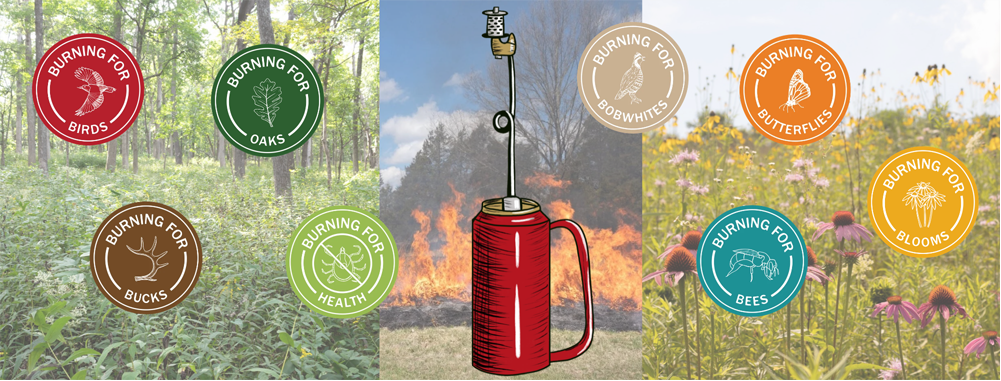
Prescribed fires are used to restore natural plant communities, improve forest health, enhance habitat for wildlife, control invasive plants, and many other reasons. Fire has been part of the natural world in Indiana for thousands of years.
Blooms
Without fire, many native wildflowers don’t get enough sunlight to bloom. Across the forests and grasslands of Indiana, fire can help boost native plant diversity.
Oaks
Oaks and their acorns are important to wildlife, and without fire, it is very difficult for young oaks to grow. Prescribed fire is an important part of ensuring that we continue to have oak forests in Indiana.
Birds
Many of Indiana’s most threatened birds need grasslands, open woodlands, and young forest to nest and raise their young, which fire can help create.
Bees
Bees are deeply important pollinators of food for humans and wildlife alike, and fire can help boost their abundance and diversity. Without fire, wildflower diversity drops and grasslands important to bees become forests.
Butterflies
Natural areas managed with fire provide resources for butterflies. Some of Indiana’s rarest butterflies, such as the Karner blue butterfly, rely on fire-dependent plants and ecosystems to survive.
Bucks
Lots of landowners want deer on their properties, and fire can help attract them. Fire, especially when used with other techniques like thinning, can provide food and cover for deer
Bobwhites
Bobwhite quail are sometimes called “firebirds” because of how much they rely on fire. Fire encourages food sources and creates just the right habitat for quail.
Health
Regular fire decreases both ticks and tickborne illness. Fire kills ticks directly, creates drier conditions where ticks can’t thrive, and reduces questing platforms.